

Florida Energy Code vs Manual D: What Is the Difference and Which Do You Need?
The Florida Energy Code sets how energy efficient a building must be, while a Manual D duct design sizes the ductwork that delivers air to each room, so many Florida HVAC permits need both, not one or the other. The energy code report proves the whole building complies, and Manual D proves the duct system will move the right airflow. ACDuctDesign.com prepares Florida Energy Code compliance reports, Manual J, Manual S and Manual D calculations for HVAC and general contractors, usually within 48 hours.
Contractors and architects in Florida often hear both terms at the permit counter and assume they are interchangeable. They are not. This guide explains what each report does, how they connect, and what changes when the next code edition arrives on December 31, 2026.

What Is the Florida Energy Code?
The Florida Energy Code is the Florida Building Code, Energy Conservation, the volume of the statewide building code that sets minimum efficiency for walls, roofs, windows, ducts, air leakage and HVAC equipment. Florida writes its own version instead of adopting the IECC as published.
The Florida Energy Code 8th Edition (2023) is the edition in force today. The Florida Department of Business and Professional Regulation describes it as the 7th Edition base code plus Commission-approved changes drawn from the 2021 IECC, as summarized in the DBPR 8th Edition energy code brochure.
For a residential permit, Florida Energy Code compliance is usually shown with a calculation report and the state forms that go with it. Here is what that documentation covers:
- Envelope: insulation R-values, window U-factor and SHGC, and air leakage verified by a blower door test.
- Ducts: duct insulation by location and a duct leakage test, unless all ducts and the air handler sit inside the thermal envelope.
- Equipment: efficiency ratings and a sizing calculation attached under Section R403.7.
- Compliance path: prescriptive, performance (Section R405) or the Energy Rating Index (Section R406).
The Florida Energy Code grades the whole building, not just the air conditioner.
FLORIDA PERMIT ON HOLD? WE PREPARE THE ENERGY CODE REPORT!
What Is a Manual D Duct Design?
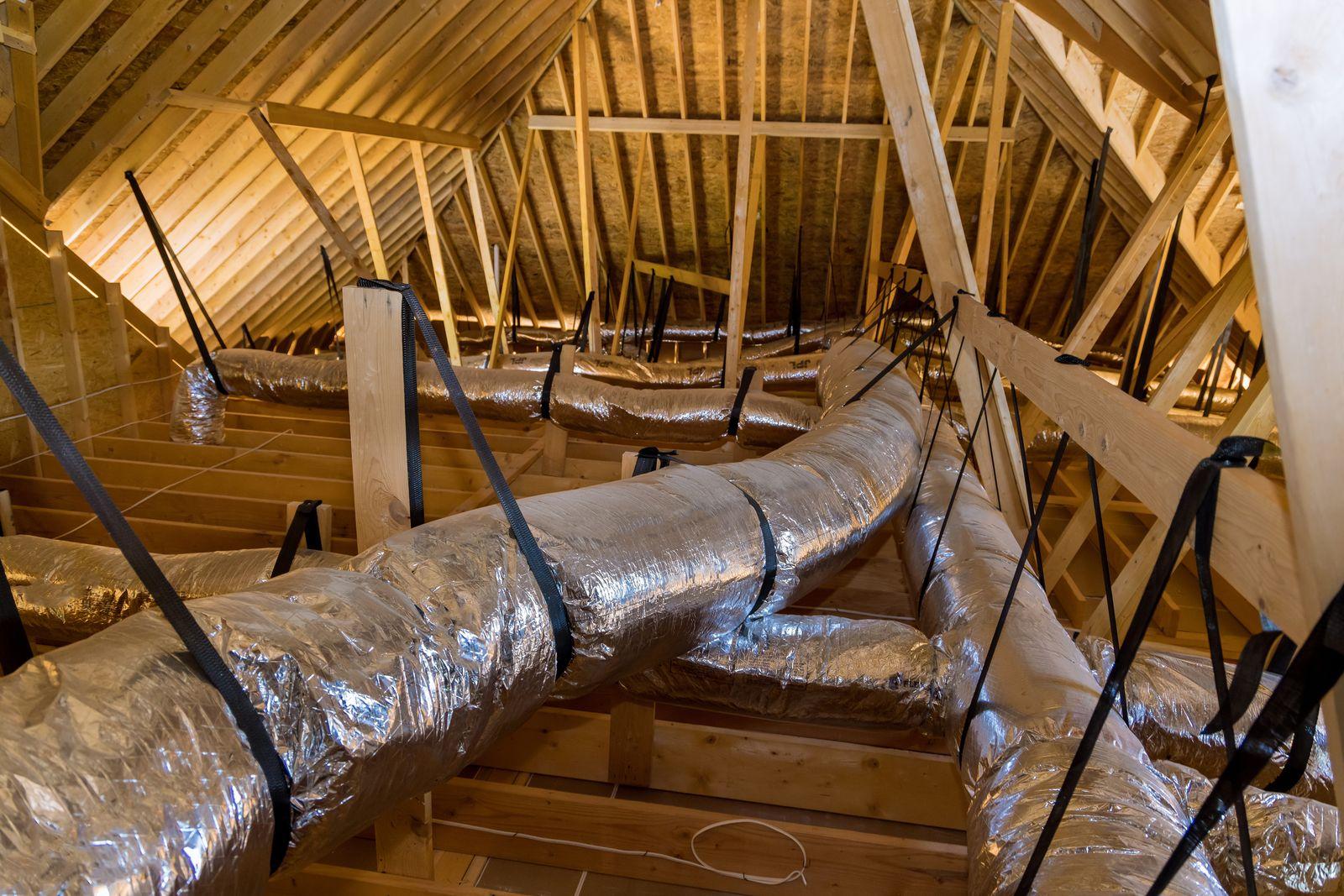
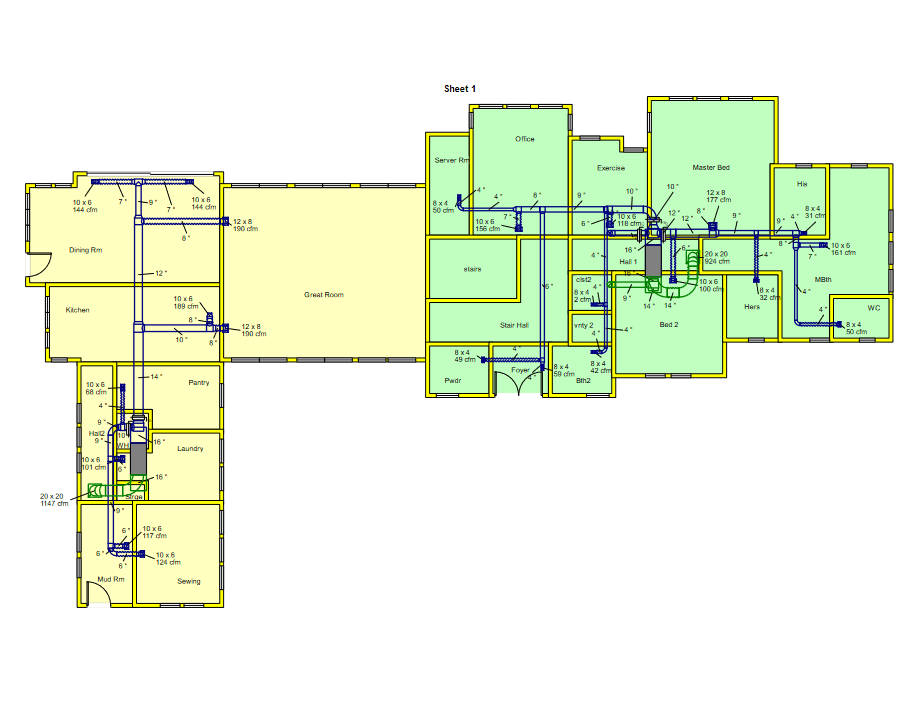
A Manual D duct design is the ACCA procedure for sizing residential supply and return ducts. It starts from the room-by-room airflow your Manual J load calculation produces and the blower data for the equipment you selected.
From there, the designer works out how much static pressure the system can spend on ducts, fittings, filters and grilles, then sizes every trunk and branch so each room receives its design airflow without excess noise or pressure.
A complete Manual D package typically gives you:
- Supply and return duct sizes for every trunk and branch run.
- Design airflow (CFM) for each room and each register.
- A friction rate and available static pressure worksheet.
- Return air sizing so the system can breathe.
The ACCA technical standards publish Manual D alongside Manual J and Manual S, and the three are meant to work as a set.
Manual D answers one question: will the air actually reach every room?
What Is the Difference Between the Florida Energy Code and Manual D?
The short answer: the Florida Energy Code is a legal minimum for building efficiency, and Manual D is an engineering procedure for one system inside that building. The table below shows how they compare side by side.
| Question | Florida Energy Code report | Manual D duct design |
|---|---|---|
| What is it? | A compliance calculation under the Florida Building Code, Energy Conservation | An ACCA design procedure for residential duct systems |
| What does it prove? | The building meets minimum efficiency | Each room gets its design airflow |
| Main inputs | Envelope, windows, ducts, equipment, air leakage | Room CFM from Manual J, blower data, duct layout, fittings |
| Typical output | Code forms and calculation summary for the permit | Duct sizes, register CFM, static pressure worksheet |
| Who reviews it? | Building department energy plan reviewer | Mechanical plan reviewer or inspector, where required |
The two documents share data. Duct location, duct insulation and duct leakage affect the energy code result, while the ducts themselves are sized in Manual D. A change in one often means updating the other, which is why ordering them from one team avoids mismatched numbers.
One report proves the house is efficient; the other proves the ducts work.
Which Reports Does a Florida Permit Package Usually Need?
Most new homes and full system changeouts in Florida need the energy code report plus matched load and duct calculations. Check your building department’s checklist, then order what applies.
Florida Energy Code
Compliance report
Priced by Square Footage
- Residential or commercial
- Reports formatted for Florida permitting
- Up to 2 minor revisions
Manual J
Heat load calculation
From $109
- Room-by-room heating and cooling loads
- Florida design conditions for your address
- Feeds both the energy report and Manual D
Manual D
AC duct design
From $259
- Trunk and branch duct sizing
- Register CFM for every room
- Static pressure worksheet
When Do You Need the Energy Code Report, Manual D, or Both?
Requirements vary by county and city, so the building department checklist always wins. In practice, Florida contractors tend to run into these situations:
- New single-family home: expect the energy code report, a load calculation and equipment sizing, and in many jurisdictions a duct design.
- Addition with new ducts: the energy code applies to the addition, and new duct runs should be sized so existing rooms keep their airflow.
- Full system changeout: plan for a sizing calculation; if ducts are replaced or rerouted, add a Manual D.
- Duct replacement only: Manual D is the core document, with duct insulation and leakage rules from the energy code.
- Commercial tenant buildout: commercial energy compliance plus commercial load and duct calculations.
The state form for the prescriptive path, Form R402, lists a sizing calculation under Section R403.7 and HVAC selection based on ACCA Manual S. You can see that checklist in county copies such as this Seminole County Form R402 (2023).
When in doubt, submit the matched set and stop the back and forth with plan review.
ONE TEAM FOR YOUR ENERGY CODE, MANUAL J AND MANUAL D
What Changes With the 9th Edition (2026) Florida Building Code?
The 2026 Florida Building Code, Ninth Edition, takes effect on December 31, 2026. Under Florida law, the edition in effect on the date you apply for a permit governs that permit, so applications filed before the cutoff stay on the 8th Edition. Some local offices set their own same-week cutoff times, so confirm with your jurisdiction.
According to the DBPR 2026 energy code changes overview, the new energy volume builds on the 8th Edition with selected changes from the 2024 IECC. Residential changes that matter to HVAC contractors include:
- Equipment sizing: Sections R403.7.1 and R403.7.1.1 now treat single-stage, two-stage and multi-stage systems differently and require verifying that latent capacity meets the calculated latent load.
- Duct testing: the duct leakage testing exception for the performance path is removed, so ducts outside the thermal envelope must be tested.
- Performance path: the maximum total e-Ratio drops from 0.95 to 0.85.
- Prescriptive path: a new Section R407 requires additional efficiency credits.
- Forms: the RESCheck option is removed from the residential compliance forms.
The latent load change makes an accurate load calculation more important than ever in Florida’s humid climate, and the duct testing change makes good duct design and sealing harder to skip.
Permits filed on or after December 31, 2026 play by the new rules, so plan your calculations now.
How Do Commercial Florida Projects Handle Energy Code and Duct Design?
Commercial buildings follow the commercial provisions of the Florida energy code instead of the residential ones. Offices, schools, clinics, hospitals and apartment complexes usually need commercial load calculations and commercial duct design before the mechanical plans are approved.
For those projects, ACDuctDesign.com provides Manual N commercial load calculations, Manual Q duct designs, and COMCheck where the jurisdiction accepts it. Our commercial duct design team works from your architectural plans and equipment schedule.
Working statewide? Our Florida HVAC calculation services page covers residential and commercial work across the state, and the residential Florida duct design page explains our home duct layouts.
Bigger buildings, same principle: prove the efficiency, then prove the airflow.
COMMERCIAL FLORIDA PROJECT? WE HANDLE THOSE TOO!
What Should You Send to Get Florida Reports Fast?
Complete information is the fastest route to a permit-ready report. Before you order, gather these items:
- Floor plans, elevations and wall sections with insulation values.
- Window and door schedule with U-factor and SHGC.
- Job site address, so the correct county, climate zone and code edition are applied.
- Equipment make, model and blower data, if already selected.
- Planned duct and air handler location, inside or outside the thermal envelope.
Send it through the online order form or call 800-810-3280. Standard delivery is within 48 hours of receiving everything we need, and a 24-hour rush, meaning one business day, is available for an additional fee.
A complete package on day one is the difference between a quick permit and a long wait.
Frequently Asked Questions
Is a Manual D the same as a Florida Energy Code report?
No. The Florida Energy Code report shows the whole building meets minimum efficiency. A Manual D duct design sizes the ducts so every room gets its design airflow. Most new home permits need both.
Which edition of the Florida Energy Code applies right now?
The 8th Edition (2023) applies to permit applications filed before December 31, 2026. The 9th Edition (2026) applies to applications filed on or after that date. Confirm local cutoff times with your building department.
Does the Florida energy code require a load calculation?
Do duct leakage tests affect my duct design?
They are separate steps, but connected. The duct design sets sizes and layout, and the leakage test verifies the installed system is sealed. Ducts inside the thermal envelope may be exempt from testing.
How fast can I get Florida Energy Code and Manual D reports?
Standard turnaround is 48 hours from receipt of all required information. A 24-hour rush, meaning one business day, is available for an additional fee; call 800-810-3280.
Can homeowners order these reports?
This service is built for HVAC and general contractors, architects and builders. Homeowners ordering without a contractor should visit ManualJCalculator.com.